Live & touring
The performance begins before the audience arrives.
Touring combines strategy, logistics, production and performance into one continuously moving operation.
Before the show
The audience sees the performance. It rarely sees what made it possible.
Long before the doors open, transport schedules, loading docks, technical crews, staging, lighting, sound, video, security, catering and local production are already in motion.
Management ensures that the artistic, operational and commercial parts of the tour remain connected. A failure in one area can affect every other part of the production.
Load-in
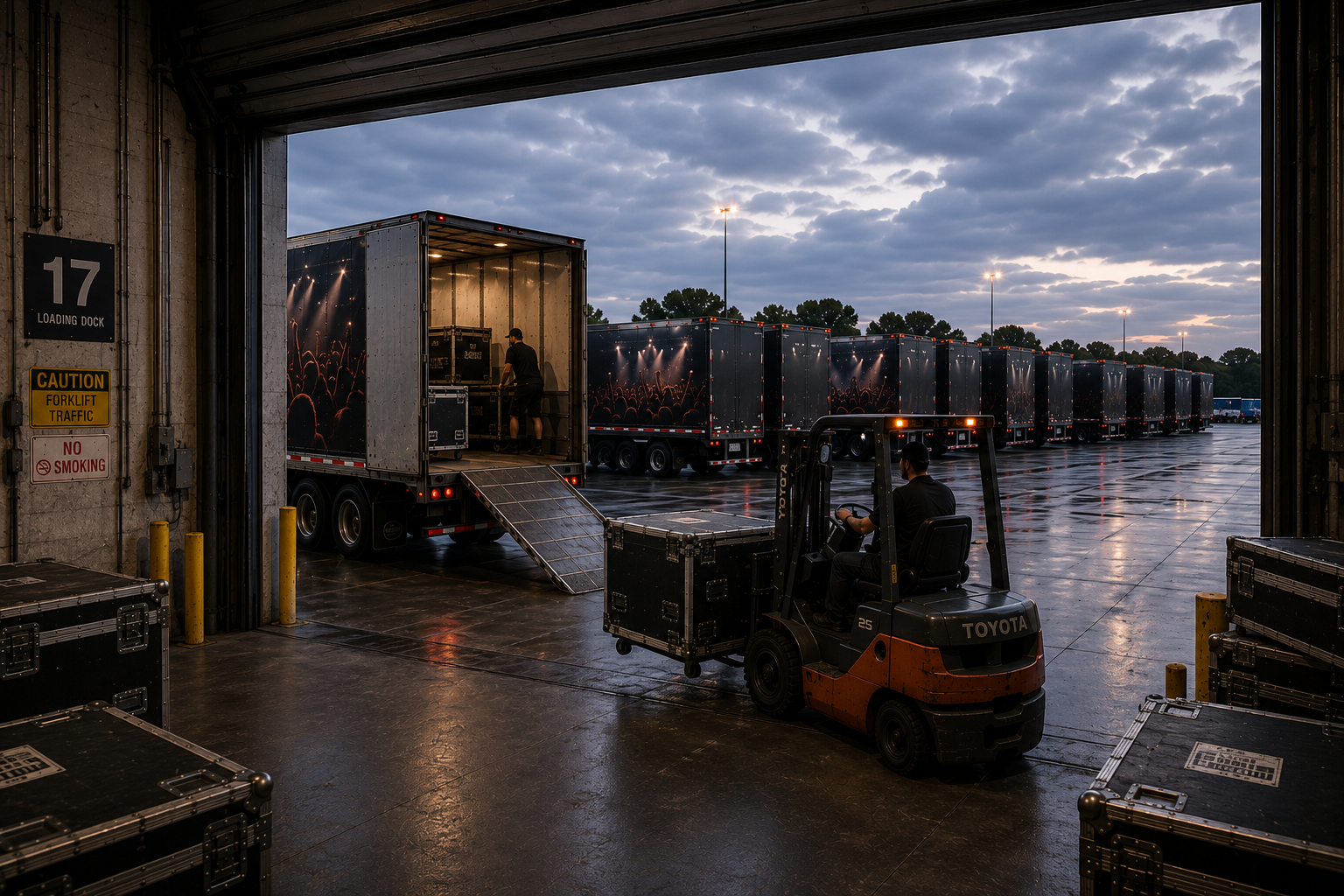
The production must arrive in the order it will be built.
Touring equipment is transported by department and unloaded according to the production schedule. Rigging and staging must be available before lighting, sound, video and backline can be installed.
Without that sequence, crews wait, equipment blocks working areas and the entire schedule begins to slip. A successful load-in is the result of planning that started long before the first truck reached the venue.
Touring disciplines
Planning, production, performance and development must operate as one system.
Planning
A tour begins long before the first performance.
Routing, budgets, venues, production, transport, accommodation, promotion and local coordination must be brought together before the artist and crew arrive. Each decision affects the cost, timing and viability of everything that follows.
Production
Every technical element must arrive in the correct order.
Rigging, staging, sound, lighting, video and backline are transported and installed according to a carefully planned sequence. A professional production depends on each department receiving what it needs when it needs it.
Performance
The live show must fulfil the promise of the artist.
Repertoire, pacing, musicianship, production and audience communication should create one complete experience. The show must strengthen the artist’s identity rather than simply reproduce the recorded material.
Development
Every performance should create the conditions for another.
Touring should build audience demand, promoter confidence, local relationships and reliable market information. The value of a performance is measured not only by the evening itself, but by what becomes possible afterwards.
Routing
A tour is not a collection of dates.
It is a route.
Venue availability is only one consideration. Travel distance, border crossings, rest requirements, production access, audience potential, local promotion and financial viability must all be considered together.
Effective routing reduces unnecessary cost and fatigue while allowing each performance to support the development of the next market. A full calendar is not automatically a good tour.
Market development
One performance creates an appearance.
Repeated demand creates a market.
Performing in a territory once does not establish a lasting presence. Sustainable growth requires promoter relationships, audience data, local media, follow-up activity and a clear reason to return.
Management evaluates what each date produced and determines how the momentum should continue. The objective is to return with stronger demand, a better position and greater commercial value.
Built on the road